- Knowledge Base
- Finance
- Incoming Center
- How to configure an incoming channel
- How to add a run
- How to edit a run
- How to mark a run as complete
- How to archive a run
- How to delete a run
- How to change the assignee
- How to add a result in a checklist run
- How to add bulk results in a checklist run
- How to share run tasks with external participants
- How to generate an Excel or PDF report from a checklist run
- How to filter the run tasks view
- What is an office asset
- How to create a new asset
- How to manage an asset
- How to move an asset
- How to dispose of an asset
- How to transfer (in) an asset
- How to transfer (out) an asset
- How to log a sighting of an asset
- How to log an inspection of an asset
- How to log maintenance on an asset
- How to export a record of an asset
- How to print asset labels
- Introduction
- Admissions
- Assets
- Bank Accounts
- Boards
- Business Trips
- Candidates
- Checklists
- Clients
- Companies
- Consents
- Contacts
- Contracts
- Custom Forms
- Departments
- Documents
- Evaluations
- Employee Performance
- GL Accounts
- Incoming Center
- Integrations/External Systems
- Invoices
- Job Management
- Key Dates
- Months
- Offices
- Personnel
- Polls
- Project Management
- Project Status
- Purchase Orders
- Schedule
- Shared Spaces
- Teams
- Time Off
- Time Tracking
- Transactions
- Vendors
- Mobile Application
- What is a personnel asset
- How to create a new asset
- How to manage an asset
- How to move an asset
- How to log inspection on an asset
- How to log maintenance on an asset
- How to dispose of an asset
- How to transfer (out) an asset
- How to transfer (in) an asset
- How to log a sighting on an asset
- How to print asset labels
- How to export a record of an asset
- What is a project asset
- How to create a new asset
- How to manage an asset
- How to move an asset
- How to log inspection on an asset
- How to log maintenance on an asset
- How to dispose of an asset
- How to transfer (out) an asset
- How to transfer (in) an asset
- How to log a sighting of an asset
- How to print asset labels
- How to export a record of an asset
- Project transactions
- How to record an estimate
- How to create a budget
- How to submit transaction items for approval
- How to approve or deny budgeting items from the transactions grid
- How to create a purchase order from approved estimates
- How to link approved estimates to approved budgets
- How to cancel a transaction
- How to deactivate a transaction
- How to edit a transaction
- How to re-submit a denied transaction
How to configure an incoming channel
The Channel Configuration holds all the essential information that you need to know about the channel. You can find basic information like the Channel Name, External Systems, Entity Types, Companies, whether it’s financial, whether it’s active, and the Import Date. In order to activate an incoming channel, you need to have an external system set up in Vault Synapse.
To configure an incoming channel, go to the Finance module and click the Incoming Center module.
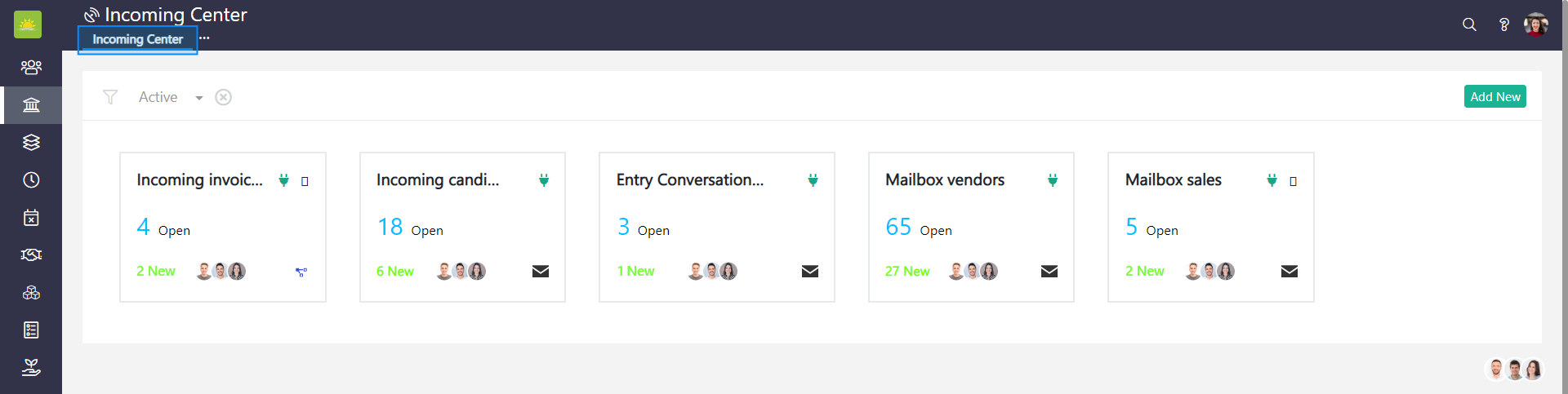
Click the Channel Configuration tab inside of a specific channel.
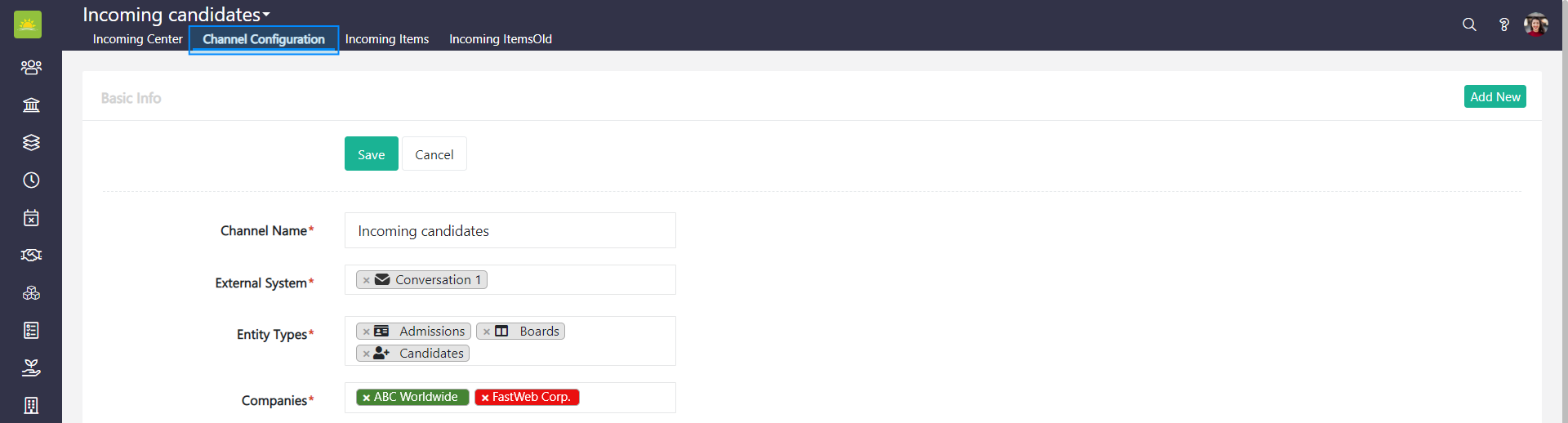
The Channel Configuration form contains the following information:
- Channel Name – The name of the channel.
- External System – Select one mailbox or a custom type from the dropdown menu to apply to the Channel. You will be able to choose one of the items from the dropdown menu that is not already in use.
- Entity Types – Select one or more entity types from the dropdown menu for this channel. The available entity types will depend on your company purchase plan and will be set up by your organization administrator. For instance, if the entity type is board, when you receive the incoming item from the mailbox it is possible to create a ticket directly from the incoming item. If the entity type is candidate, when you receive the incoming item from mailbox it is possible to create a candidate profile directly from the incoming item.
- Companies – Choose companies that can view the channel. It can be a single company or multiple companies. Only selected companies will be able to view the channel’s incoming items.
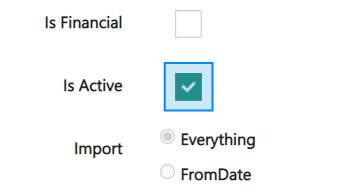
- Is Financial – If the box is ticked, the channel will be classified as financial. That means when you add or receive a new incoming item, you will need to fill out many more fields with details than in a non-financial channel such as Vendor, due on date, paid on date, delivery date, Amount Number, Reference number, and more.
- Is Active – This box is checked by default. Unticking this checkbox will result in changing the channel status from active to inactive.
- Import – You can import everything from this channel, or you can choose a date from the date picker to import incoming items from.
Review the information and click Save.
How to deactivate a channel
Note! A channel cannot be deleted from the system. However, you can deactivate it. A channel that has been deactivated can still be viewed by using an inactive filter and can be reactivated.
To deactivate a channel, go to the Finance module and click the Incoming Center module.
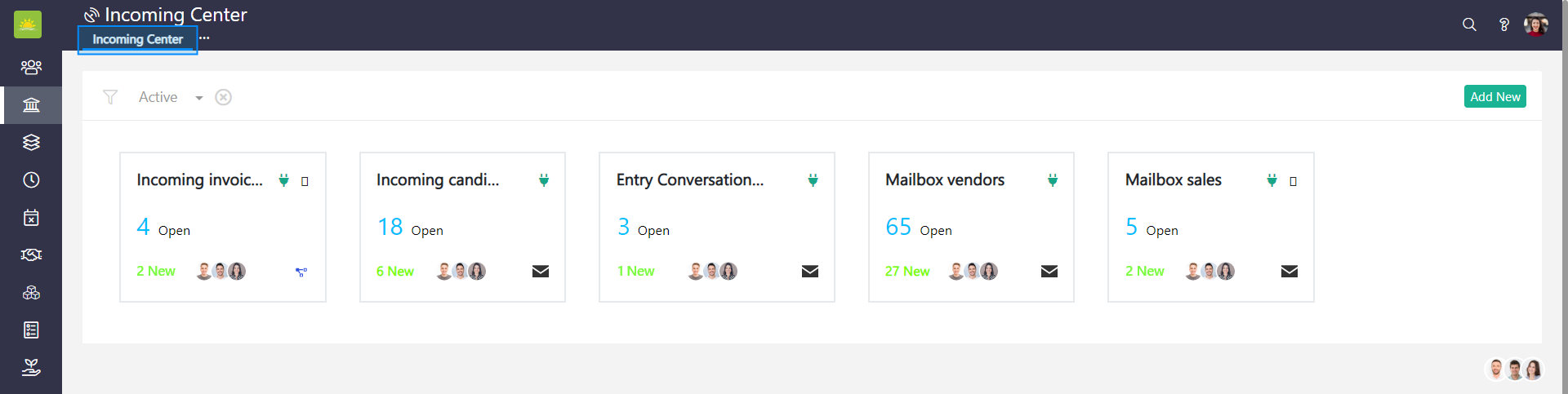
Click the Channel Configuration tab inside of a specific channel that you want to deactivate.
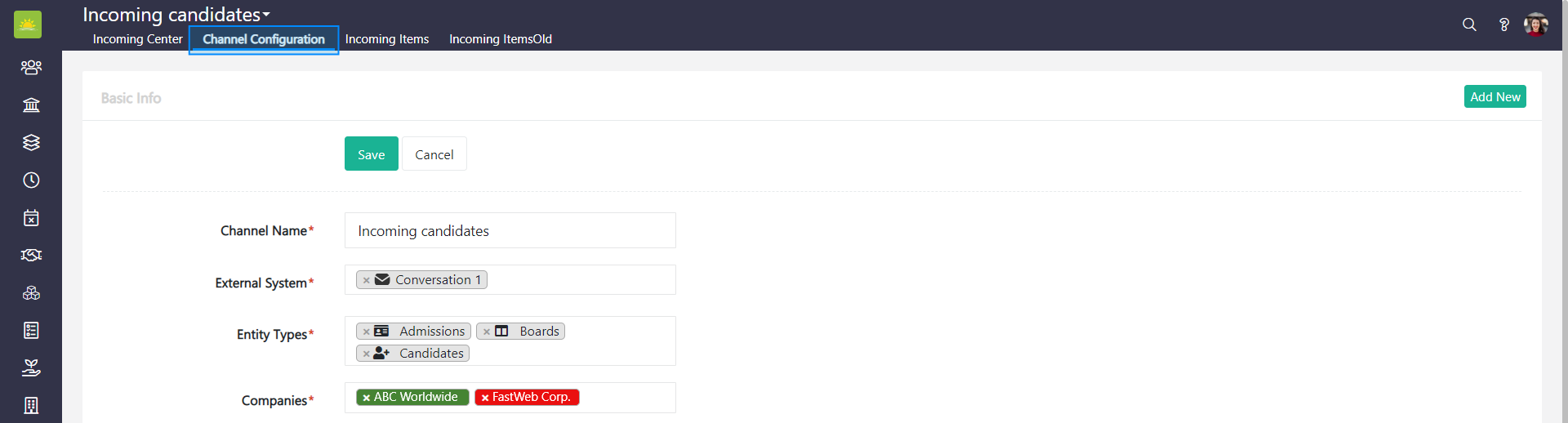
Untick the Is Active checkbox.
Click Save to deactivate the channel.
Was this article helpful?
Didn’t find what you were looking for?
Contact us and we’ll build the right solution for you. Vault Synapse can be fully customized based on your business needs.