- Knowledge Base
- Finance
- Purchase Orders
- What is a purchase order list
- How to add a run
- How to edit a run
- How to mark a run as complete
- How to archive a run
- How to delete a run
- How to change the assignee
- How to add a result in a checklist run
- How to add bulk results in a checklist run
- How to share run tasks with external participants
- How to generate an Excel or PDF report from a checklist run
- How to filter the run tasks view
- What is an office asset
- How to create a new asset
- How to manage an asset
- How to move an asset
- How to dispose of an asset
- How to transfer (in) an asset
- How to transfer (out) an asset
- How to log a sighting of an asset
- How to log an inspection of an asset
- How to log maintenance on an asset
- How to export a record of an asset
- How to print asset labels
- Introduction
- Admissions
- Assets
- Bank Accounts
- Boards
- Business Trips
- Candidates
- Checklists
- Clients
- Companies
- Consents
- Contacts
- Contracts
- Custom Forms
- Departments
- Documents
- Evaluations
- Employee Performance
- GL Accounts
- Incoming Center
- Integrations/External Systems
- Invoices
- Job Management
- Key Dates
- Months
- Offices
- Personnel
- Polls
- Project Management
- Project Status
- Purchase Orders
- Schedule
- Shared Spaces
- Teams
- Time Off
- Time Tracking
- Transactions
- Vendors
- Mobile Application
- What is a personnel asset
- How to create a new asset
- How to manage an asset
- How to move an asset
- How to log inspection on an asset
- How to log maintenance on an asset
- How to dispose of an asset
- How to transfer (out) an asset
- How to transfer (in) an asset
- How to log a sighting on an asset
- How to print asset labels
- How to export a record of an asset
- What is a project asset
- How to create a new asset
- How to manage an asset
- How to move an asset
- How to log inspection on an asset
- How to log maintenance on an asset
- How to dispose of an asset
- How to transfer (out) an asset
- How to transfer (in) an asset
- How to log a sighting of an asset
- How to print asset labels
- How to export a record of an asset
- Project transactions
- How to record an estimate
- How to create a budget
- How to submit transaction items for approval
- How to approve or deny budgeting items from the transactions grid
- How to create a purchase order from approved estimates
- How to link approved estimates to approved budgets
- How to cancel a transaction
- How to deactivate a transaction
- How to edit a transaction
- How to re-submit a denied transaction
What is a purchase order list
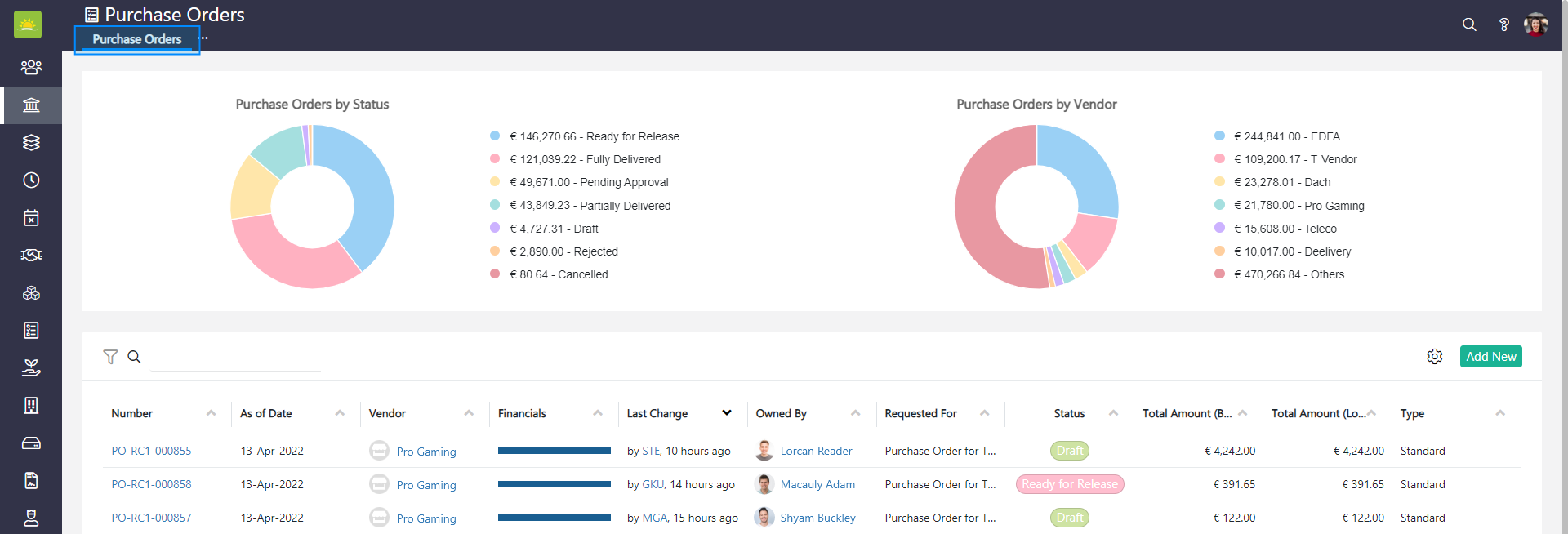
The purchase order list provides you with all the relevant information about purchase orders. The clear structure enables you to view the order number, vendors, status, owner of the purchase order, type, and other financial information.
To see the purchase order list, go to the Finance module and click the Purchase Orders module. You will be presented with a lot of valuable information. You can also create a new purchase order directly from this page.
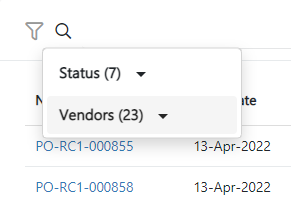
You can filter grids. Use filters to help narrow down your search.
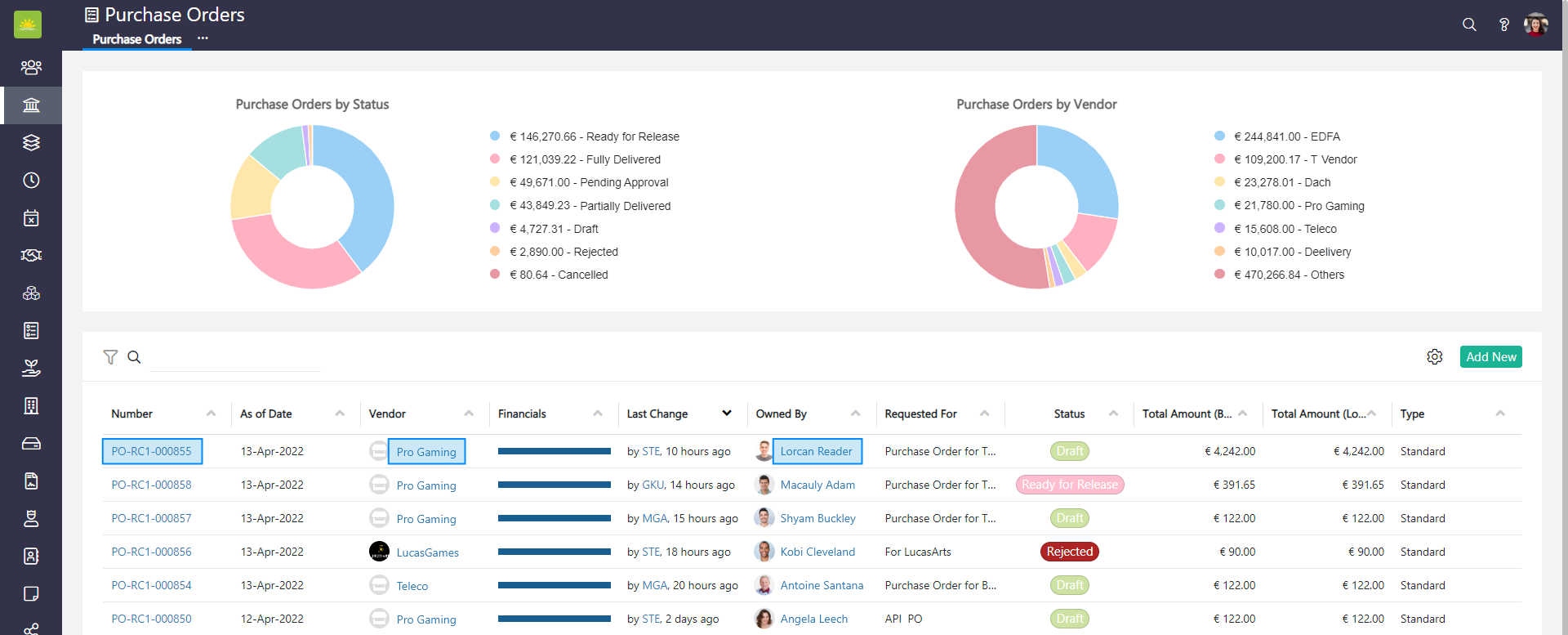
Clicking on values in the purchase order view will take you to specific tabs across Vault Synapse’s modules.
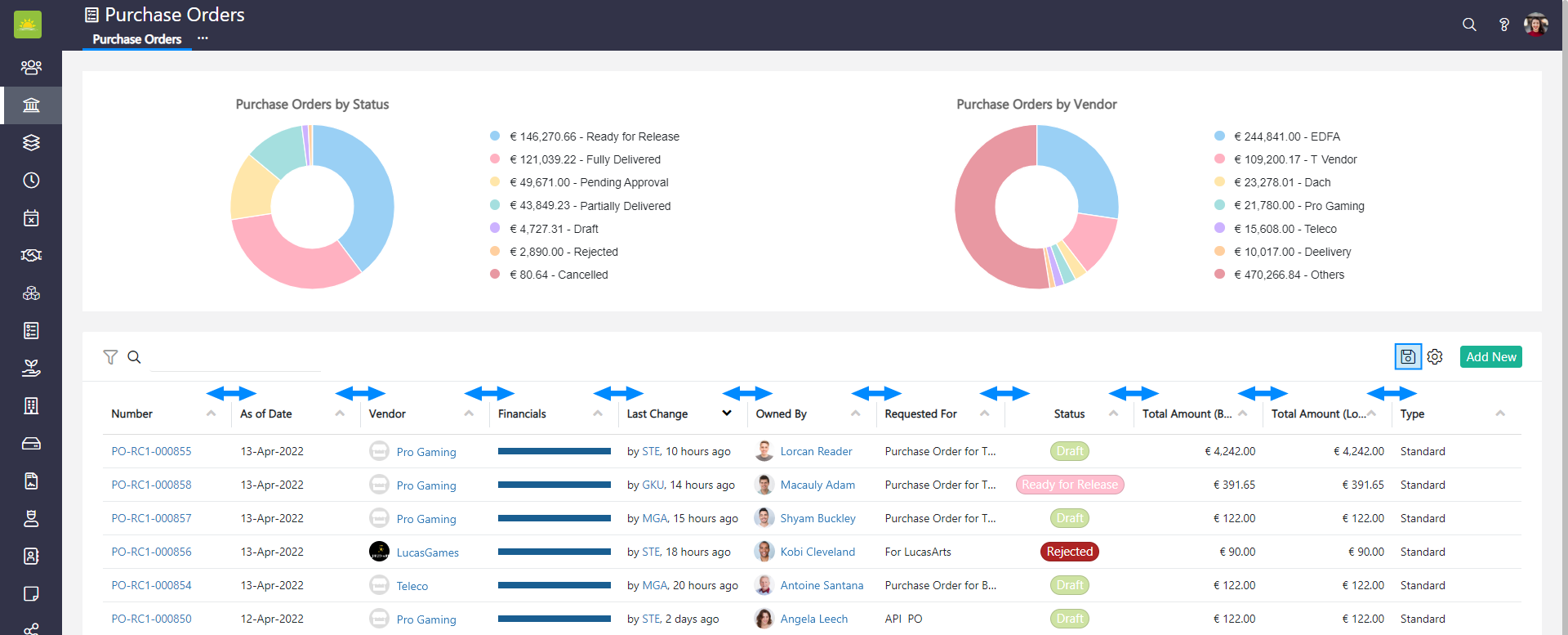
In the purchase order list, you can change and save the width of the columns in the grid. Click  to save the changes.
The columns in the grid are optional and are based on your configuration. Click the link to find out how to customize the view.
You can see this information from the purchase order list view:
- As of Date – This is the date when the purchase order was issued.
- Financials – This data is represented by a bar. Move your mouse over the bar to view more details such as how the purchase order compares with commitment and invoices.
- Invoiced Amount (Base) – The invoiced amount connected with the purchase order in base currency.
- Invoiced Amount (Local) – The invoiced amount connected with the purchase order in local currency.
- Last Change – Indicates the last change to the purchase order and who made it.
- Number – This number is generated by the system and identifies the purchase order. How the system generates this number can be set up in the Organization Configuration by an administrator.
- Owned By – This is the name of who is in the Requested By field.
- Requested For – Describes what the purchase order is for.
- Status – Statuses are color coded so that you can gather information from a quick glance. They can be set up in the Organization Configuration by an administrator (e.g. fully delivered, pending approval etc.).
- Total Amount (Base) – This is the total amount of the purchase order in base currency.
- Total Amount (Local) – This is the total amount of the purchase order in local currency.
- Vendor – The name of the vendor who the purchase order is for. Vendors can be created by users.
Was this article helpful?
Didn’t find what you were looking for?
Contact us and we’ll build the right solution for you. Vault Synapse can be fully customized based on your business needs.