- Knowledge Base
- Projects
- Schedule
- What is a project schedule
- How to add a run
- How to edit a run
- How to mark a run as complete
- How to archive a run
- How to delete a run
- How to change the assignee
- How to add a result in a checklist run
- How to add bulk results in a checklist run
- How to share run tasks with external participants
- How to generate an Excel or PDF report from a checklist run
- How to filter the run tasks view
- What is an office asset
- How to create a new asset
- How to manage an asset
- How to move an asset
- How to dispose of an asset
- How to transfer (in) an asset
- How to transfer (out) an asset
- How to log a sighting of an asset
- How to log an inspection of an asset
- How to log maintenance on an asset
- How to export a record of an asset
- How to print asset labels
- Introduction
- Admissions
- Assets
- Bank Accounts
- Boards
- Business Trips
- Candidates
- Checklists
- Clients
- Companies
- Consents
- Contacts
- Contracts
- Custom Forms
- Departments
- Documents
- Evaluations
- Employee Performance
- GL Accounts
- Incoming Center
- Integrations/External Systems
- Invoices
- Job Management
- Key Dates
- Months
- Offices
- Personnel
- Polls
- Project Management
- Project Status
- Purchase Orders
- Schedule
- Shared Spaces
- Teams
- Time Off
- Time Tracking
- Transactions
- Vendors
- Mobile Application
- What is a personnel asset
- How to create a new asset
- How to manage an asset
- How to move an asset
- How to log inspection on an asset
- How to log maintenance on an asset
- How to dispose of an asset
- How to transfer (out) an asset
- How to transfer (in) an asset
- How to log a sighting on an asset
- How to print asset labels
- How to export a record of an asset
- What is a project asset
- How to create a new asset
- How to manage an asset
- How to move an asset
- How to log inspection on an asset
- How to log maintenance on an asset
- How to dispose of an asset
- How to transfer (out) an asset
- How to transfer (in) an asset
- How to log a sighting of an asset
- How to print asset labels
- How to export a record of an asset
- Project transactions
- How to record an estimate
- How to create a budget
- How to submit transaction items for approval
- How to approve or deny budgeting items from the transactions grid
- How to create a purchase order from approved estimates
- How to link approved estimates to approved budgets
- How to cancel a transaction
- How to deactivate a transaction
- How to edit a transaction
- How to re-submit a denied transaction
What is a project schedule
A project schedule outlines the start date, end date, and milestones that must be met in order for a project to be completed on time. It’s a dynamic document that will be maintained and updated after the initial planning phase and throughout the project as things change. You can connect data in one up-to-date view and compare plans to actual progress. You can also toggle layers of data so that you can visualize and track information.
To view information about a project’s schedule, go to the Projects module and click the Schedule tab inside of a specific project.
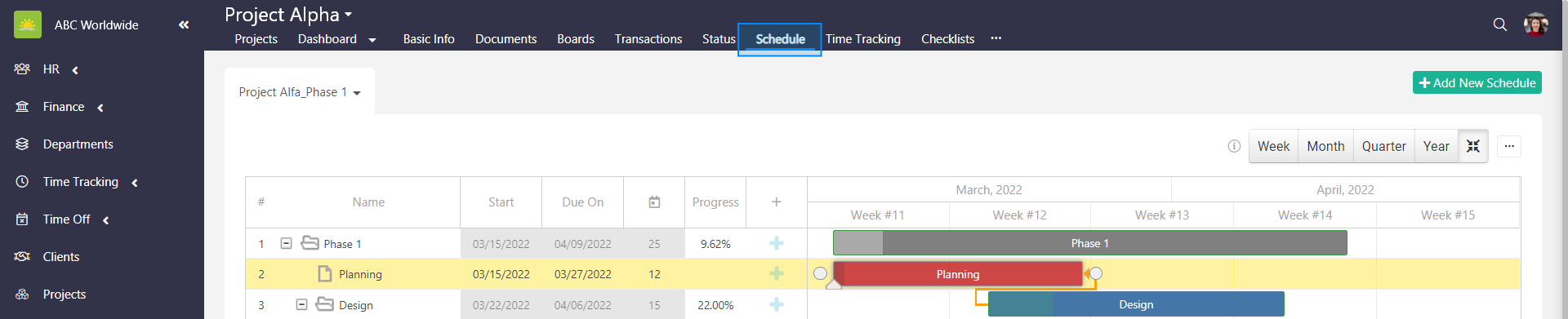
The project schedule is visually represented via a Gantt chart. This allows users to get a clear and visual overview of the project’s activities. On the left-hand side of the chart, you will find a list of tasks necessary for a project. On the right-hand side of the chart, you will find a time scale. Each task is represented by a bar where the length represents the duration. Each bar has a title of the task that needs to be completed, along with any relevant information that will help carry it to completion.
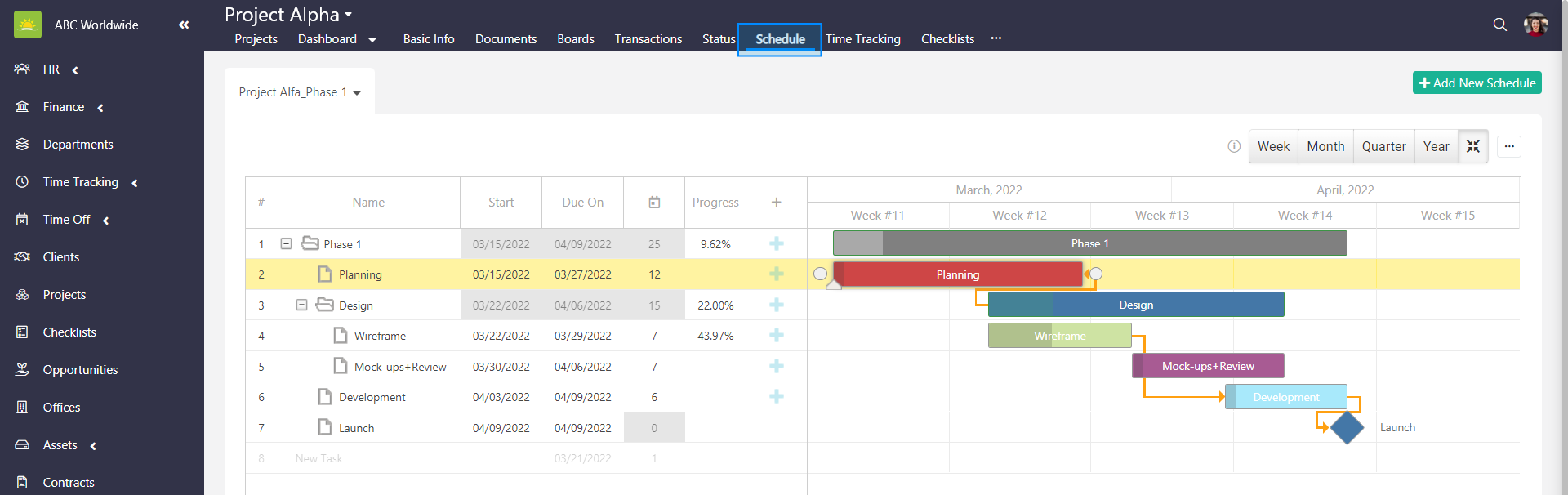
The Gantt chart can be viewed by week, month, quarter, or year.

Click on the zoom icon to automatically resize the Gantt chart area so that it fits the entire window.

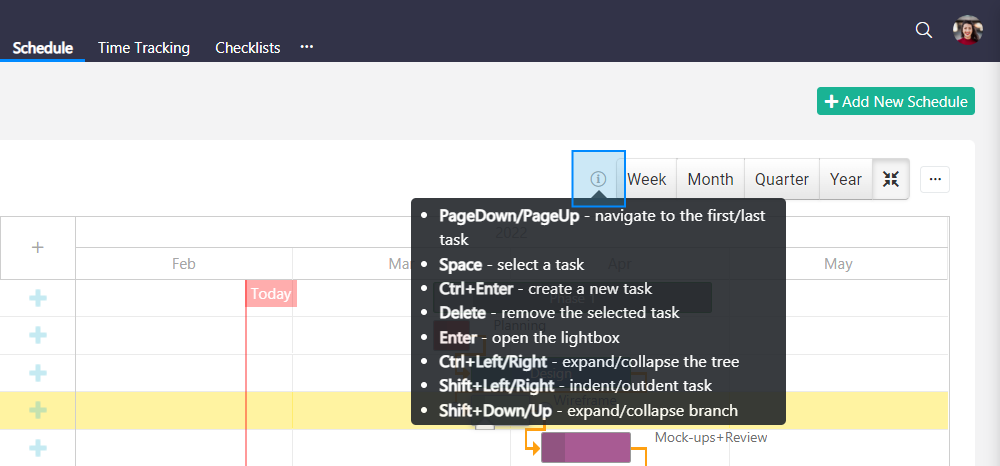
Click on the info icon for keyboard shortcuts that will give you a better UI experience.
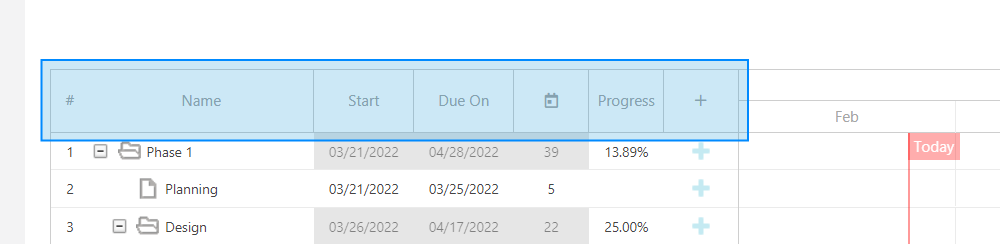
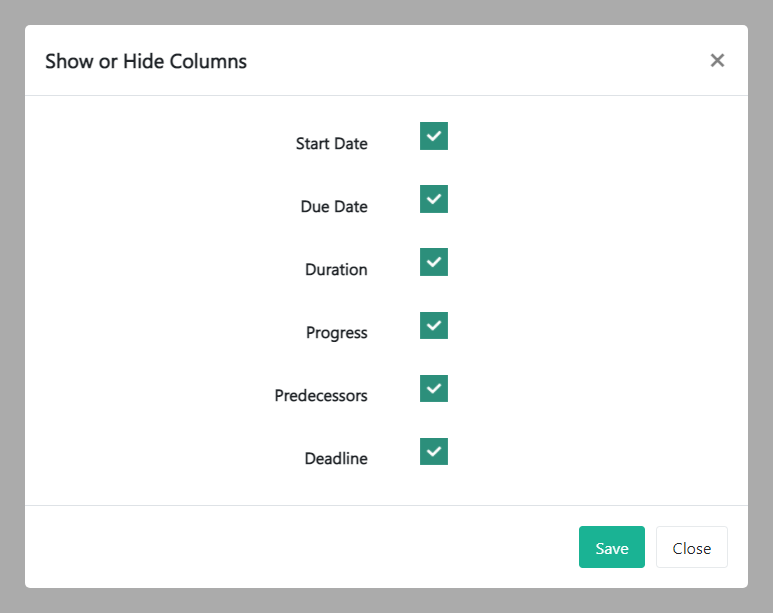
Click on any column name on the left-hand side of the Gantt chart and a Show or Hide Columns modal window pops up. From here you can also change the width of each column.
Select which columns you want to show or hide. The Predecessors and Deadline columns are hidden by default. After you’ve made your changes, click Save.
Was this article helpful?
Didn’t find what you were looking for?
Contact us and we’ll build the right solution for you. Vault Synapse can be fully customized based on your business needs.